AI that works

AI-powered Code Migration in Insurance 

How we use AI agents to validate the migration of a central web tracking system and make modernization predictable.

#LegacyTransformation #ai #Modernization
Exxfer Knowledge Graph

Our Impact

  • Exxeta checklist icon

    Feasibility study for AI-driven migration completed in just 2 months 

  • Exxeta network chart icon

    Knowledge graph extracted from >20,000 lines of legacy code

  • Exxeta upward trend arrow icon

    Up to 50 % efficiency potential identified for the migration

The Challenge

An innovation team at a large German insurer faces a strategic challenge: a central application needs to be migrated from a legacy programming language to a modern target architecture. 

The reason: new compliance requirements mandate the long-term replacement of outdated technologies. However, this is not a small script, but a business-critical system with over 20,000 lines of code – originally developed more than 15 years ago by an external vendor. 

The application processes large volumes of data and implements core business logic. Its underlying processes are complex – and over time have become difficult for most of the team to fully understand. 

A manual migration to a new language would be too time-consuming, costly, and risky. What was considered highly complex for years is now becoming tangible with AI. 

The key question: Can AI realistically accelerate such a migration – or is it still just a theoretical promise? 

The Solution 

Instead of jumping straight into migration, we started with a feasibility study. The goal: systematically evaluate whether and how AI agents can accelerate the process. 

It quickly became clear: large language models struggle when processing the full codebase at once. Too much context leads to simplifications – and ultimately to errors. 

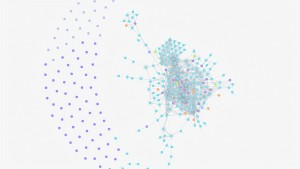
Neo4j graph database visualization showing Java class dependencies and node details panel with code complexity metrics
MCP server architecture diagram connecting Exxfer Graph, Jira data and Confluence data sources

This is where Exxfer comes in – our tool for structured code analysis. Exxfer extracts a knowledge graph from the existing code, mapping dependencies, relationships, and logic paths. Instead of processing the entire codebase, the AI can focus on relevant parts of the system. 

Via an MCP server, we enriched this graph with Jira and Confluence data. The result: a contextualized model of the application – both technical and business-related. 

The outcome: debugging becomes more precise. Relationships become visible. And the AI gets exactly the context it needs. 

Modular migration diagram showing step-by-step PHP to Python system migration with individual modules

From Knowledge Graph to AI-driven Migration 

Based on this foundation, we tested different approaches to automatically translate the system into a modern programming language. The chosen approach: modular migration. 

First, AI agents generate tests based on input and output data. For selected modules, we achieve around 80% test coverage. These tests are then validated and serve as a safety net. 

Next, we automatically translate the business logic of these modules into the target architecture. The AI follows clear rules: 1:1 translation, tests must pass, logic must remain unchanged. 

Eight out of more than 60 modules are successfully migrated – including documentation and fully executable tests. The results show: the approach is technically feasible. 

At the same time, we evaluate efficiency and token usage across different models, including Claude Sonnet and Opus. Initial analyses indicate a potential efficiency gain of up to 50%, combined with high transparency. 
Developer analyzing code with magnifying glass surrounded by icons for graph analysis, automation, alerts and settings

More than just code translation 

The real value goes beyond migration. With the knowledge graph, developers regain a structured understanding of a system that has evolved over many years. Root causes can be identified faster. Dependencies become transparent. 

AI is not used as a black box. Every transformation follows clear rules. Every change is testable. Every decision remains traceable. This creates a structured, data-driven approach to modernization. 

Illustration of a man with binoculars in Hand, which display the letters: A I

Staying realistic – enabling the future 

The feasibility study shows that AI-driven migration is not only possible – it can become predictable. 

Even if initial efficiency gains are moderate, a strategic advantage emerges: the client can evaluate early on how AI can be used productively in complex legacy migrations – instead of reacting under time pressure later. 

Are you facing a legacy migration and wondering whether AI can realistically help? Let’s evaluate together how AI agents, structured code analysis, and transparent transformation plans can accelerate your modernization.


What the experts say

  • »The project has shown that AI cannot be planned 100 %, but that is precisely where the opportunity lies. If used correctly, it can, in most cases, deliver a noticeable increase in efficiency.«


Get in Touch


Mehr gute Stories