Automation, artificial intelligence, IoT, and other emerging technologies are reshaping industrial value creation. We support companies in transforming themselves and their services — with solutions that drive impact today and shape the future of tomorrow.
Let's chat!
ContactIndustry transforms. We make it intelligent.













More efficiency. Real impact. Smarter production.
-
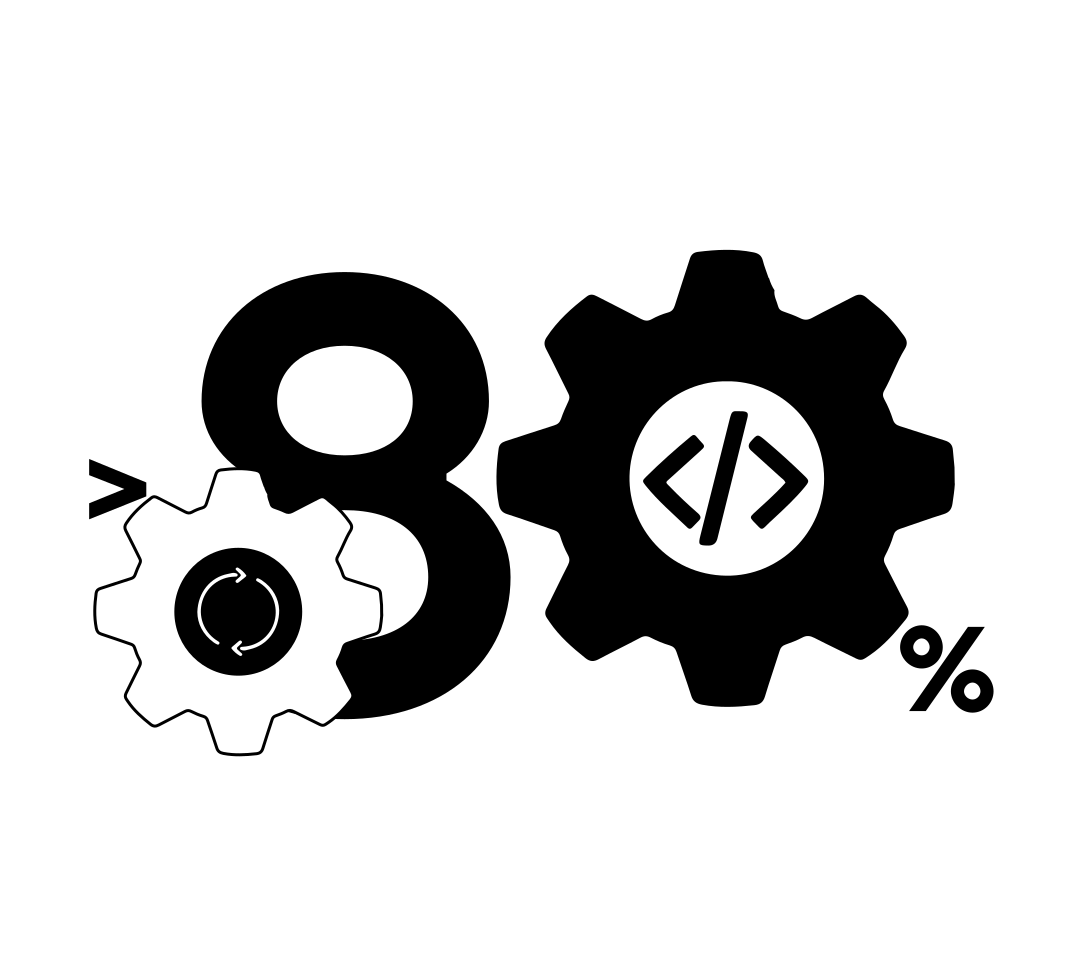
More than 80% of manufacturing companies view automation as the key to staying competitive.
-
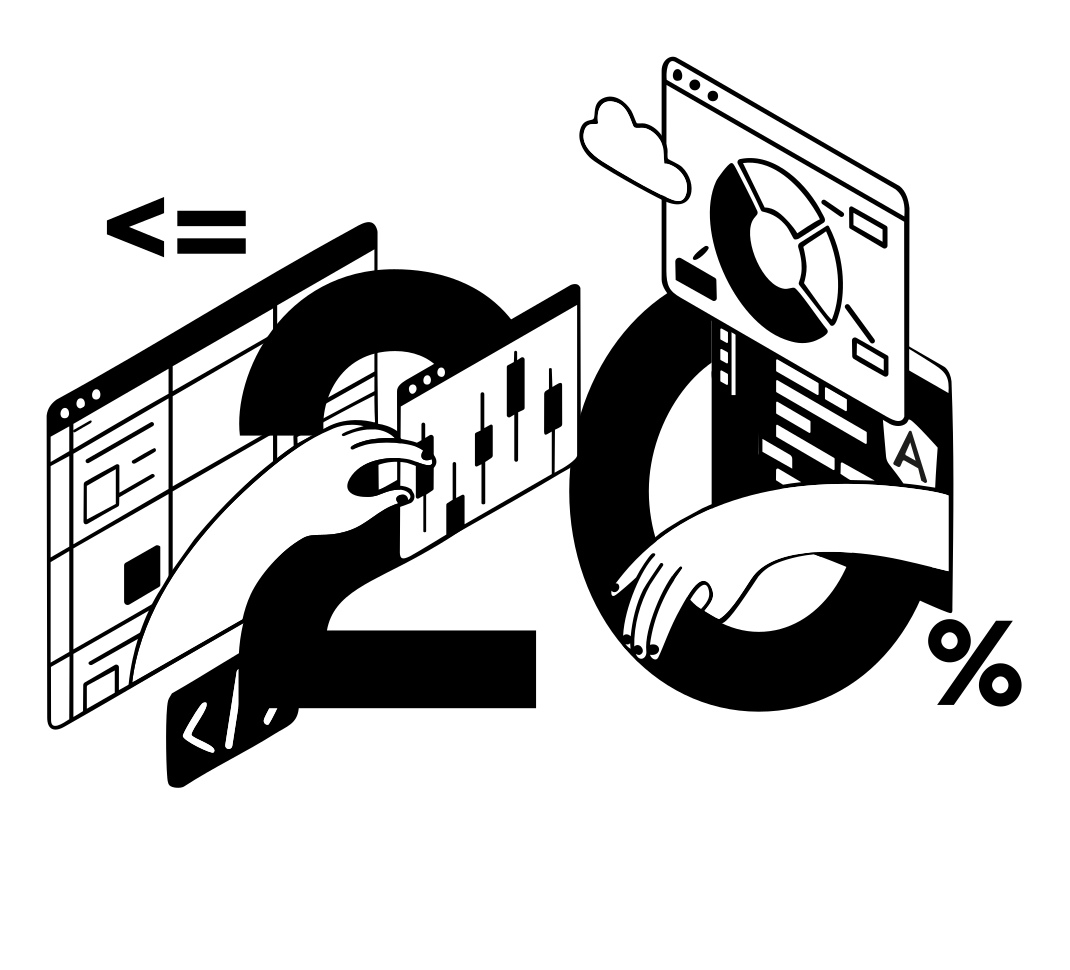
Data-driven production boosts OEE by up to 20%.
-

45% of industrial decision-makers are already using AI to improve quality and maintenance.
Our Superpowers
-

OT/IT Integration & Industrial Connectivity
-

Industrial IoT & Predictive Maintenance
-

Cloud Architectures & Migration
-

Digital Twin & Simulation
-
Production Control & MES Modernization
-
Excellence in Process Optimization


-

IT-Modernisation with Exxfer
Learn more about it IT-Modernisation with Exxfer
-

More Insights!
Learn more about it More Insights!


Contact us

Marc Schiller
Cluster Owner Industry
+49 174 7410724
FAQs
Industry 4.0 refers to the digital integration of manufacturing. Machines, equipment and products are connected through sensors and IoT platforms, creating a digital layer on top of physical production — often called a digital twin. This lets companies simulate processes, spot issues earlier and run operations more flexibly and efficiently.
Modern Manufacturing Execution Systems (MES) capture machine data in real time and make it available across the organization. When PLCs, SCADA and automation systems are connected, production becomes transparent end-to-end. The result: higher OEE, better uptime, improved product quality and shorter lead times — all at lower cost.
With predictive maintenance, sensor data is continuously analyzed to detect anomalies before they become failures. Maintenance can be scheduled proactively, reducing unplanned downtime, lowering service costs and increasing overall equipment availability.
AI is already embedded across the shop floor. Typical use cases include text and speech analysis, automated image recognition for quality control, production optimization and predictive maintenance. AI helps uncover patterns in large data sets — reducing scrap, improving quality and boosting output.
A digital twin connects a real machine with its virtual counterpart. Using real-time production data, companies can simulate scenarios, test changes or validate new equipment before making adjustments in live operations. This increases productivity and quality while reducing downtime and maintenance costs.
Most start by connecting existing machines using an Industrial IoT platform. Edge devices and standardized data models ensure reliable data capture. From there, companies build data and streaming platforms that can store and analyze information at scale. Initial use cases like predictive maintenance or digital twins help prove value and build momentum.