Physical AI & Robotics


Robotics Needs More Than Good Hardware

Physical AI Ready
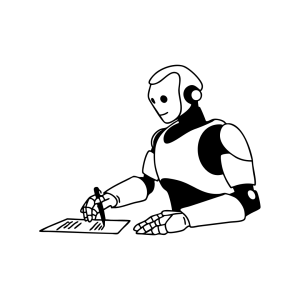
AI Embodiment
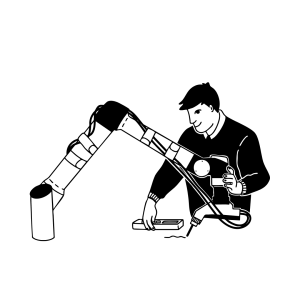
Process Integration
Strong Partnerships



From the Data Pipeline to the Humanoid Robot
-

Data Collection & Training Plattform
-

Use Case: Depalletizing in Retail
-

Use Case: Assembly Supply and Logistics


Powerful Knowledge
-

HyBex – Interactive Hydrogen Platform
We support Belgium in becoming a central hydrogen hubRead the Success Story HyBex – Interactive Hydrogen Platform
-

Artificial Intelligence
Make Business Processes More Efficient with AI. It Only Works When Everyone Pulls Together, Securely and in Compliance.
Learn more about it Artificial Intelligence
-

AI Mail Bot for Transdev Sales
How we worked with Transdev Sales to automate customer service and boost customer satisfaction.Read the Success Story AI Mail Bot for Transdev Sales
Get in Touch

Julian Kramer
Lead Robotics & Physical AI
+49 174 9951241
FAQ
Physical AI describes artificial intelligence that directly interacts with the physical world, for example through robots, sensors, or autonomous systems. It does not just analyze data but also makes decisions and translates them into immediate actions. This connects digital intelligence with real world movement.
Robotics provides the machines, physical AI makes them intelligent. While traditional robots follow predefined routines, AI driven systems can learn, adapt, and make independent decisions. This combination is what enables truly flexible automation.
AI driven robotics uses sensors, cameras, and data models to capture and interpret the environment in real time. Based on this, the system decides how to act, for example when picking, navigating, or inspecting. Performance improves continuously through machine learning.
Typical use cases include:
Production, for example quality inspection and assembly
Logistics, such as autonomous transport systems and warehouse automation
Energy and infrastructure, including inspection and maintenance
Healthcare, such as assistance systems and surgical support
Physical AI is especially effective wherever processes are complex and variable.
Physical AI enables:
Higher efficiency through automation of complex tasks
Better quality through data driven decisions
Greater flexibility in dynamic environments
Reduced workload for skilled workers
In short, processes are not only automated but also made more intelligent.
The use of AI in robotics is particularly valuable when processes are not fully standardized or frequently change. Typical scenarios include complex production environments, dynamic supply chains, or tasks that currently require significant manual adjustment.
Key challenges include:
Integration into existing IT and OT systems
Availability and quality of data
Real time performance and system stability
Security and compliance requirements
The key lies in a well designed architecture and clearly defined use cases.
The most effective starting point is a clearly defined use case with measurable value. This is followed by a pilot project that is iteratively developed and scaled. The goal is to achieve real results early rather than jumping directly into complex large scale projects.